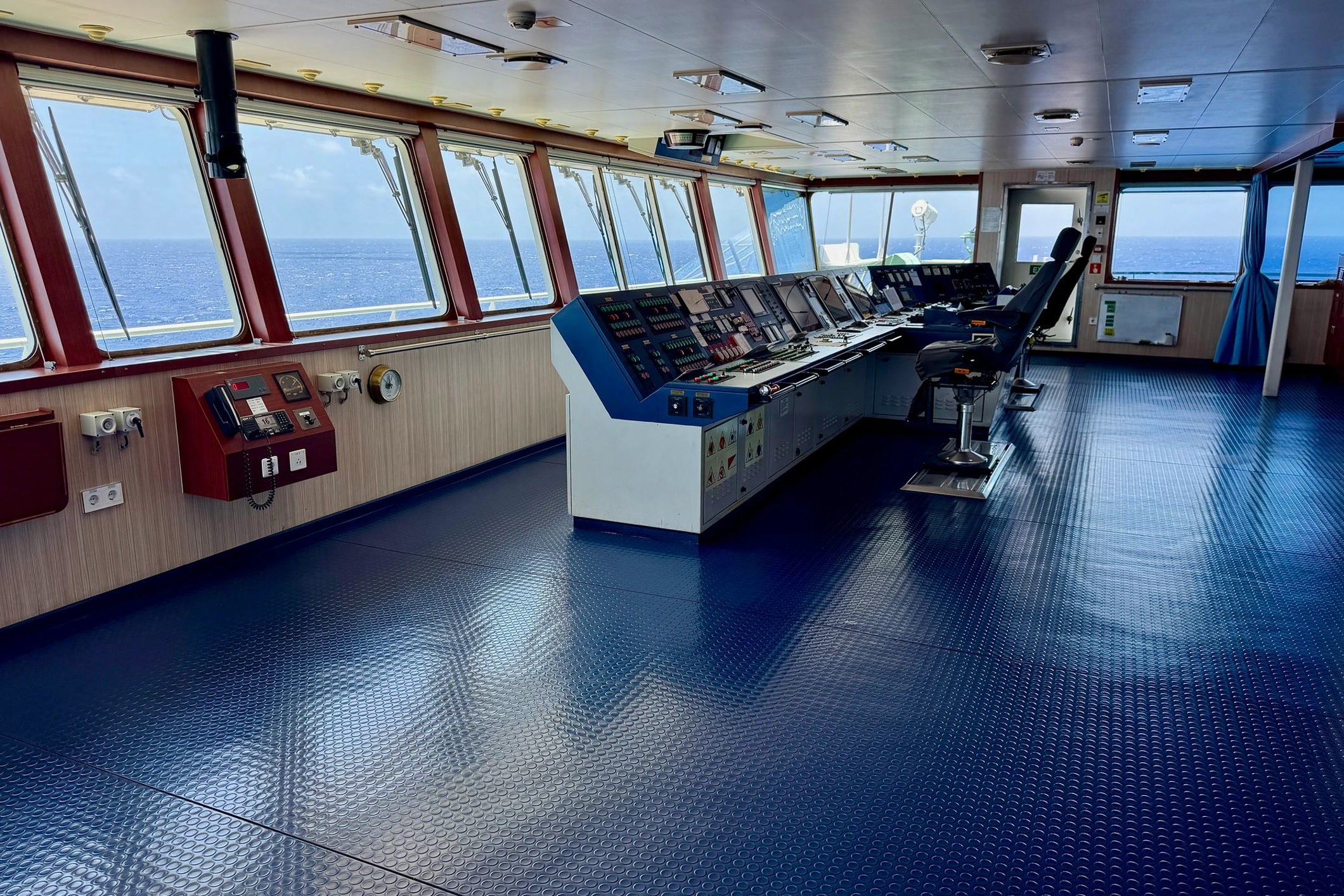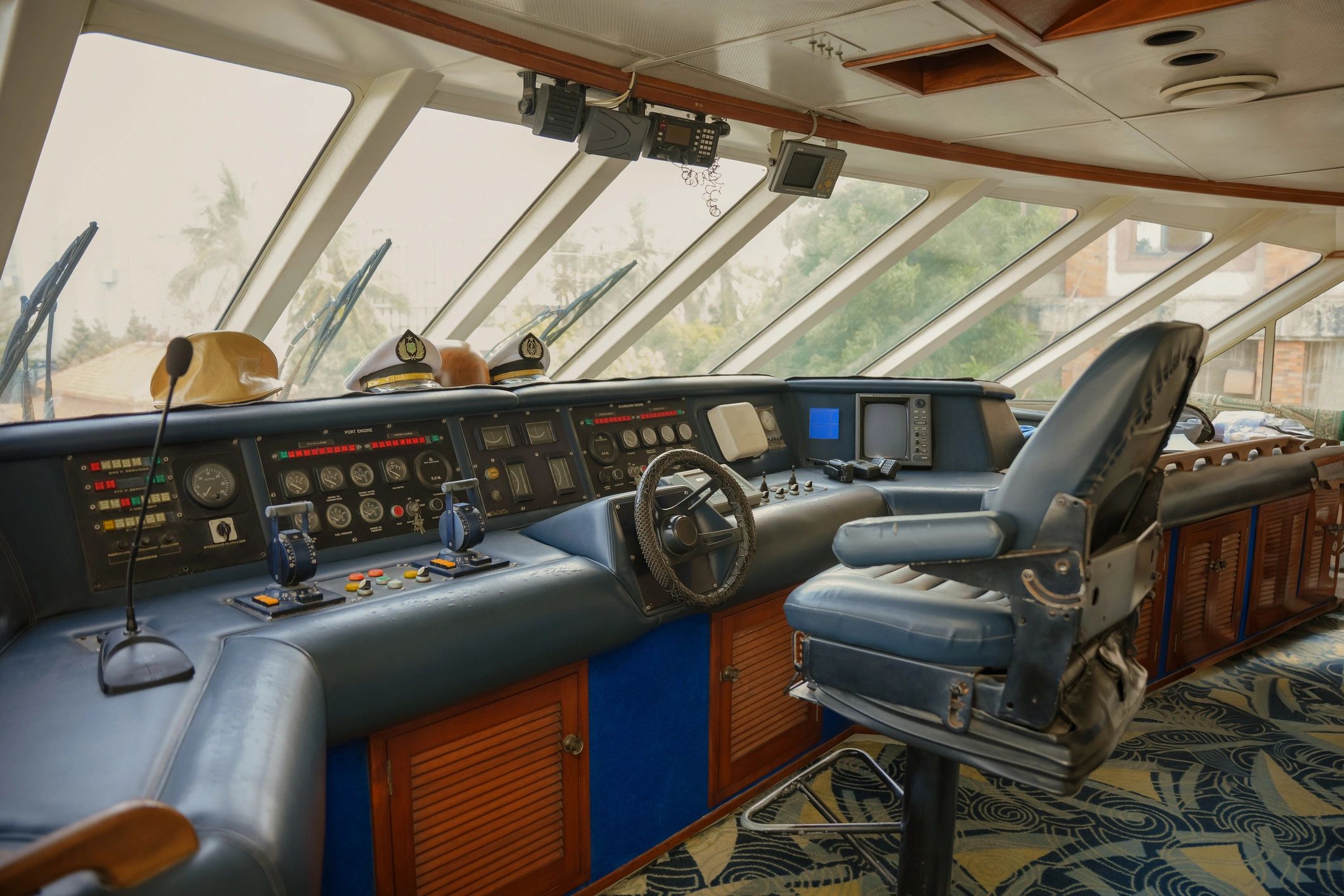
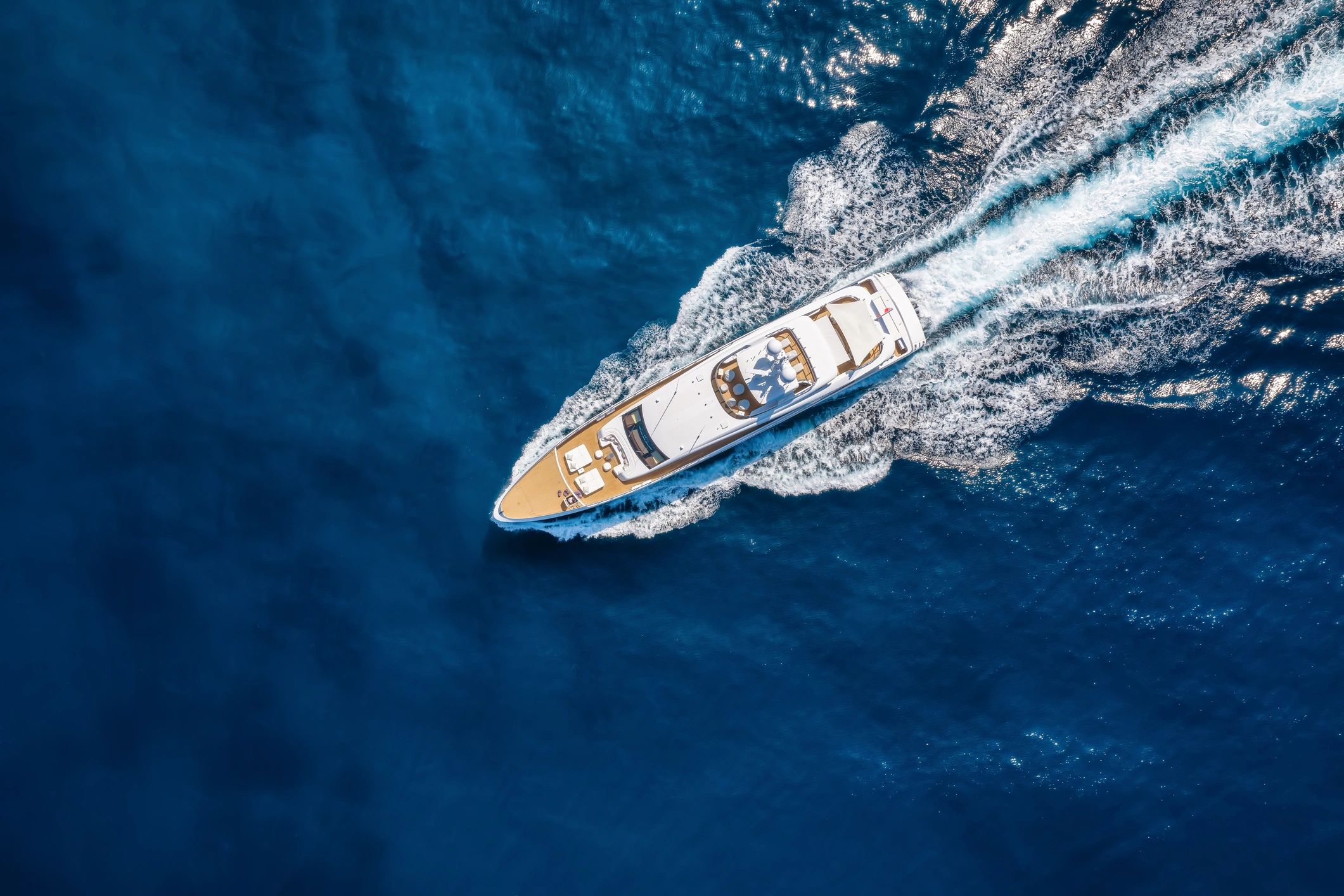
A 60-meter world-cruise charter yacht changes climate every month — northern Europe one season, the Caribbean the next — and its bridge sits at the top of the superstructure taking every degree of it. We have published a new scenario modeling what happens when that bridge's 30 m² of standard double-pane glazing is re-specified as standalone vacuum insulated glass, with every input left at the marine ROI engine's exact defaults.
The headline numbers: annual bridge HVAC conditioning falls from 2,878.8 kWh to 616.9 kWh, worth about $1,458 a year at the electricity rate that actually applies at sea, with a simple payback of roughly 7.2 years on the glazing premium.
Why the glazing load is priced at sea-generated rates
Ashore, an HVAC saving is priced against a grid tariff. Aboard, there is no grid: every kilowatt-hour of bridge conditioning comes off the ship's own generators, so the glazing load is a fuel-line item. The engine prices marine electric HVAC at $0.35/kWh, a representative onboard diesel-generator rate — roughly two and a half times a typical shore-side price. That premium is what makes a glazing decision pay back honestly: the avoided kilowatt-hours are worth more aboard than the same kilowatt-hours would be worth in a building.
It is also the yardstick the owner's management asked for before committing to a re-glaze: model the bridge HVAC line item properly, against generated power, before spending.
The scenario, at the engine's exact defaults
Nothing in this scenario is hand-tuned to flatter the technology. The model runs the 60 m superyacht preset — 30 m² of bridge glazing — on the mixed-global route profile, 280 operating days per year, an HVAC coefficient of performance of 3.0, electric conditioning at the $0.35/kWh sea-generated rate, a $350/m² VIG premium, a 5% discount rate, 2.5% energy-price escalation, and a 20-year vessel design life.
On the mixed-global route the engine's weighted mean interior-outdoor differential works out to 15.3 °C across the year — heating-dominant at 55% of operating time, cooling at 45%. The baseline package is standard double-pane insulated glass at roughly 2.8 W/m²·K whole-unit, the common marine specification. The standalone VIG replacement is modeled at 0.60 W/m²·K in the marine frame — a 4.7× improvement (2.8 ÷ 0.60).
What the engine returns
Conduction alone moves from about 2,879 kWh/year of conditioning to 617: 2,262 kWh avoided, split 1,244 heating and 1,018 cooling — compressor electricity, with the COP 3.0 already divided out of the thermal load. Solar gets modeled too, because on a world itinerary it is not a rounding error — dropping the solar heat gain coefficient from the uncoated clear baseline's 0.76 to 0.62 — the standard build's integral low-E coating — trims a further 1,905 kWh/year of cooling-season solar load at the route's 450 W/m² mean vertical irradiance. Deeper coating upgrades reach 0.28 to 0.40, so the solar savings modeled here are conservative. All in, annual bridge HVAC conditioning falls by about 4,167 kWh of compressor electricity — the COP 3.0 is already divided out of the thermal load, so these figures and the dollar math below are delivered-energy figures.
Priced at the sea-generated $0.35/kWh rate, that is about $1,458 a year. Against $10,500 of glazing premium — $350/m² across 30 m² — the simple payback is roughly 7.2 years, before rebates, route changes, or tariff movements. Run to the 20-year vessel design life at the engine's discount and escalation defaults, the net present value lands around +$11,810, alongside about 2.5 tonnes of CO₂ avoided per year at the 0.60 kg/kWh blended generator-plus-shore-power factor — about 50 tonnes over the period.
The retrofit that does not fight the boat
Bridge frames are engineered around the glass fitted at launch, and the superstructure is weight-sensitive — mass added high on the vessel is mass paid for twice. Standalone VIG builds in 6.3 to 10.3 mm, and because the glass-frit edge seal is flush, the overall unit depth equals the glass stack itself. The units drop into launch-day rebates with no frame surgery and sit near single-pane weight in the superstructure.
The physics also does the comfort work the charter crew notices first. With almost no gas in the vacuum gap, the inner lite sits near cabin temperature, so the watch keeps a clear, dry bridge in cold latitudes — without the radiant chill zone that conventional glazing puts around every helmsman.
Modeled, not measured
One caveat stated plainly: these are modeled outputs, calculated from published methodology and the marine ROI engine at its exact default inputs — not laboratory or field measurements. The engine exists precisely so the defaults stop being an argument; run the calculator with your own vessel class, route profile, and fuel basis and it prices your project, not this one.
The bottom line
On a world-cruise program, bridge glazing is one of the few upgrades that pays for itself against the fuel line rather than the utility bill. The full write-up — problem, solution, and every engine output at its default input — is in the world-cruise superyacht scenario. To put fuel and CO₂ numbers on your own vessel, run your route and rates through the marine ROI calculator.
Category context is on marine vacuum glazing, and bridge or wheelhouse layouts can be checked in the marine configurator.