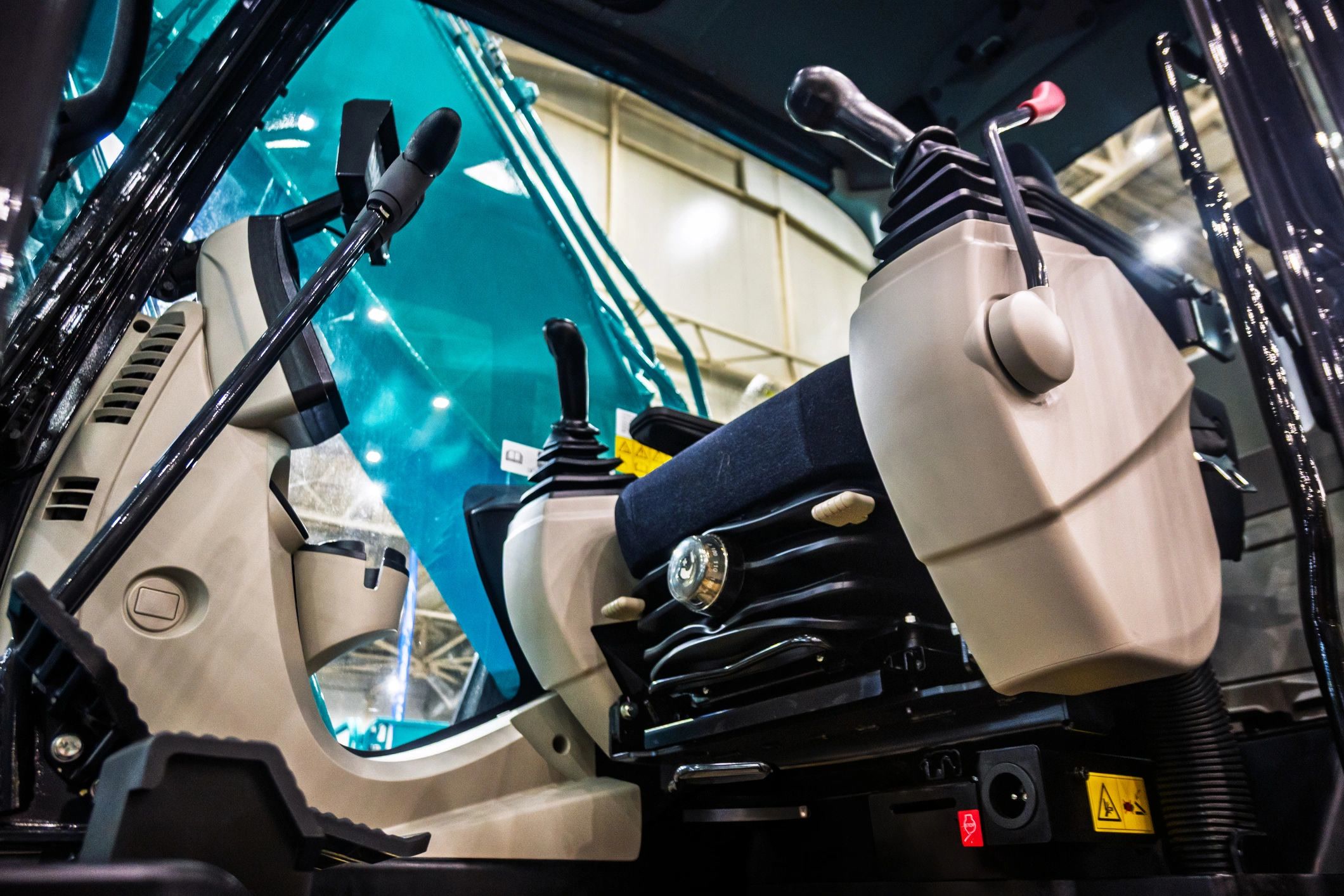
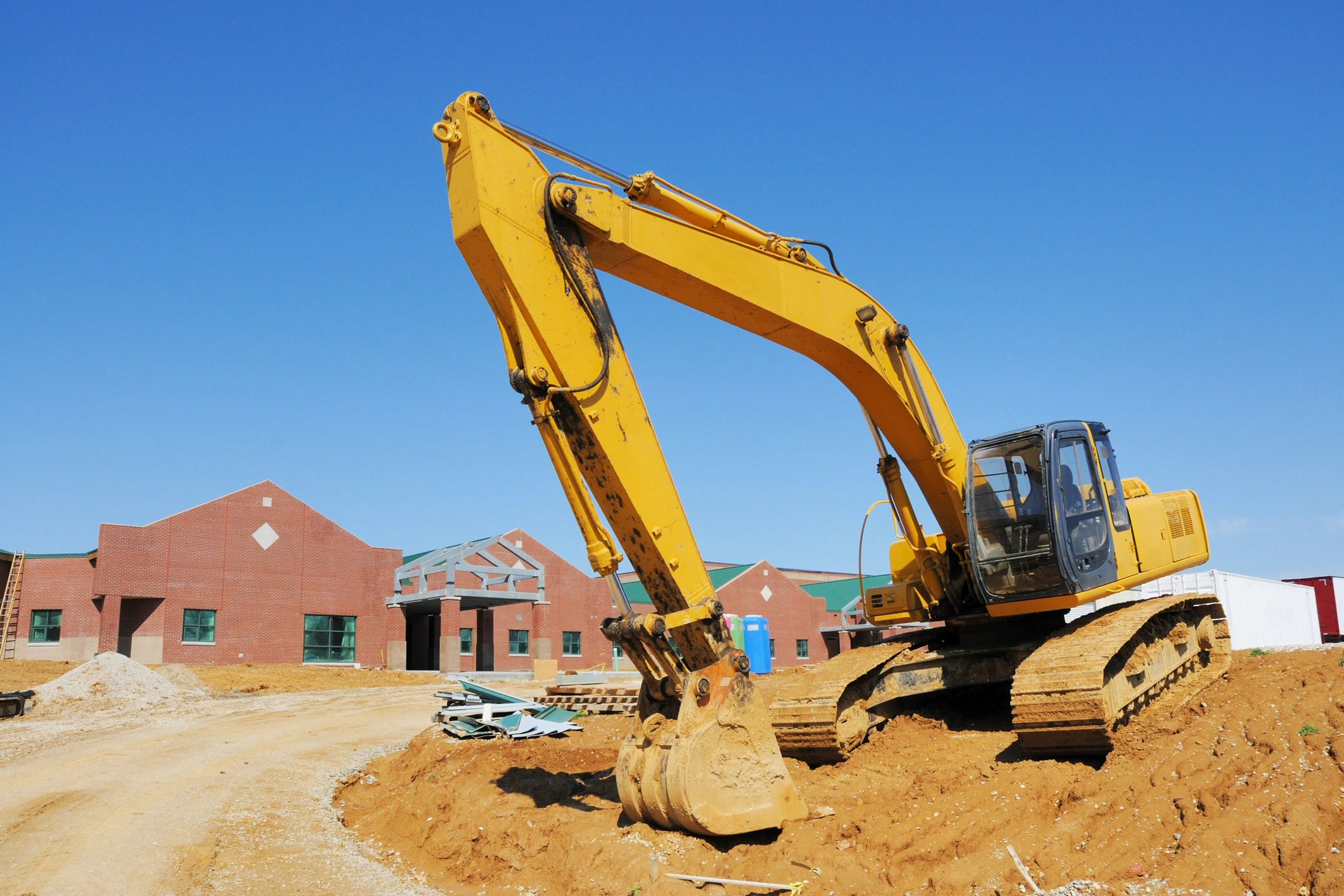
An excavator, loader or crane cab is mostly glass. Operators need clear views on every side, but all that glass makes the cab hard to heat in winter, hard to cool in summer, loud and prone to fogging. Vacuum insulated glass addresses all four problems in a unit thin enough to fit existing cab designs.
Clear views without fogging
Cab windows fog when the inside surface gets colder than the dew point of the air in the cab. Operators breathing, wet clothing and cold mornings make it worse. VIG keeps the inner lite close to cab temperature, so it resists fogging passively, without running the defroster at full blast or wiring heated glass.
A quieter cab
Engines, hydraulics and tracks are loud, and long shifts in noise wear operators down. THERMGLASS standalone units achieve a design-stage STC estimate of 35–39 dB, and hybrid units 41–45 dB — a meaningful improvement over standard single-pane cab glass at STC 28–32.
Lower HVAC load
Better-insulated glass means the cab's heating and air conditioning work less. For diesel machines this saves fuel at idle. For electric and hybrid machines it saves battery energy for doing the work, though electric drivetrains do generate some waste heat that can offset cab heating demand in cold weather. Combined with solar heat gain control, operators also stay more comfortable in direct sun.
A worked example: a mid-size excavator cab with approximately 2.5 m² of glazing, operating in a northern climate with 5,000 heating degree days, upgrading from single-pane (U ≈ 5.8 W/m²·K) to standalone VIG (U ≈ 0.46 W/m²·K). The conductive heat loss through the glass drops by roughly 92%, which at diesel idle (approximately 2 L/h, €1.20/L) translates to an estimated 0.3–0.5 L/h reduction in idle fuel consumption attributable to cab heating — approximately €1,300–2,200 per machine per year at 2,000 idle hours. Actual savings depend on climate, fuel price, and cab HVAC sizing.
Built for the job site
Cab glass deals with vibration, shock and flexing frames all day. THERMGLASS designs its vehicle units for structural integrity under vibration and load, and uses substrates compatible with the applicable safety-glazing standards for off-road machinery — including ISO 3449 (falling-object protective structures) and ISO 3471 (rollover protective structures) where those standards govern the cab assembly. Lites are specified as tempered where the application requires it; confirm the substrate specification for your machine type at order stage.
Fits existing designs
At 6.3 to 10.3 mm for standalone units, VIG is close in thickness to many existing cab windows, which makes it practical to adopt without redesigning the cab.
For OEMs and fleets
- OEMs: a premium cab option that improves comfort, efficiency and visibility
- Fleets and rental companies: retrofit glass for machines working in extreme climates
- Electric equipment makers: less glass heat loss means more working time per charge
Send us a message to discuss specifications, samples and OEM programs.
Keep reading
Cab glazing shares physics with building glass — and adds vibration and safety standards. See the excavator cab scenario for modeled heat-load and HVAC outcomes, keeping interior glass above the dew point for the fogging mechanism, and vacuum glass for RV windows for the road-going sibling market.
The machine-side detail is on construction vehicle glazing, and cab openings can be sized in the construction vehicle configurator.