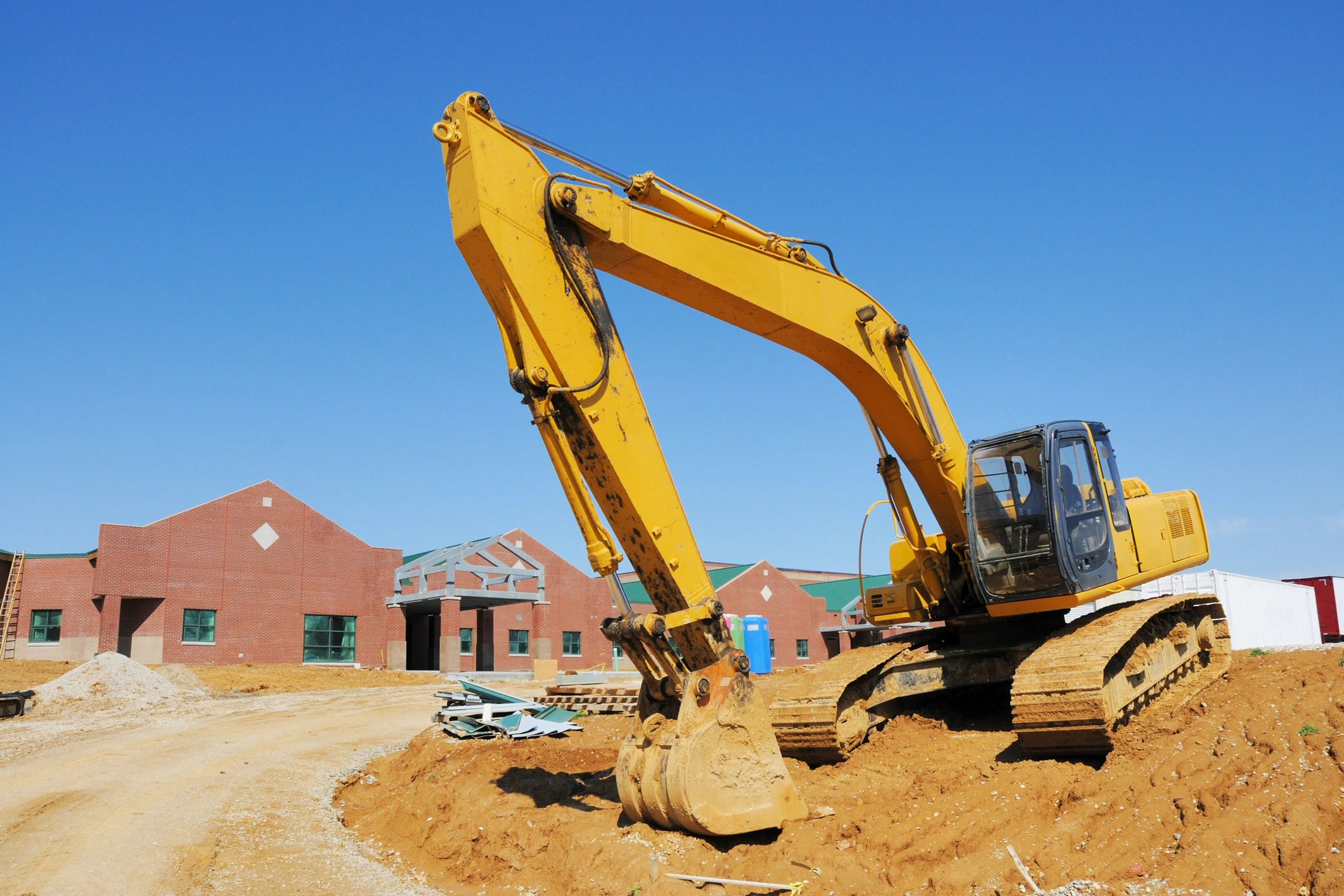
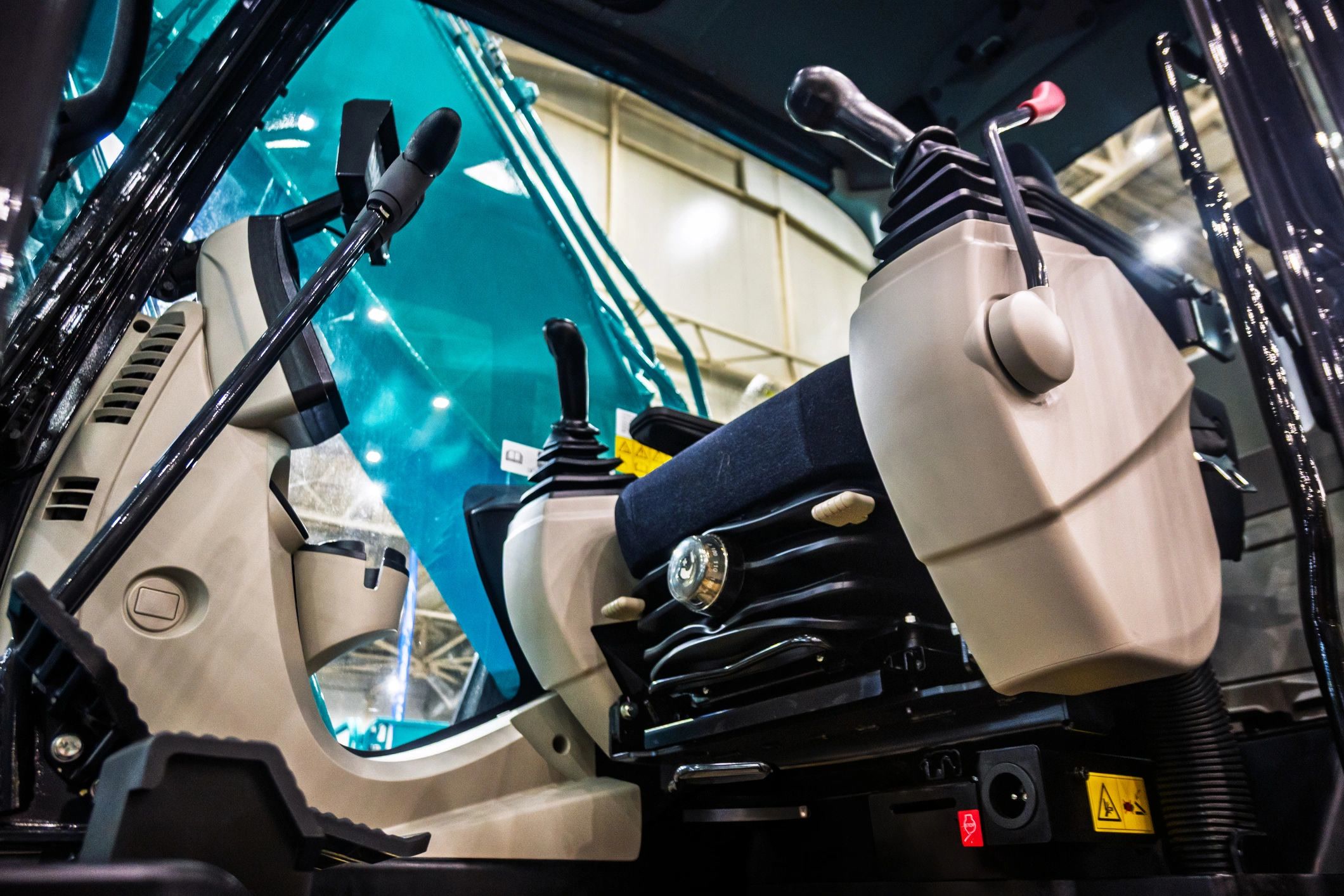
Fleet managers budget fuel for digging, lifting and hauling. What usually escapes the spreadsheet is the climate system. Keeping a glass box comfortable through a July shift and a January night shift is a real operating cost, and the glazing is the single biggest factor in how hard the HVAC has to work.
Most machine cabs still run single-pane tempered glass. It is cheap, tough and safe, and it does a fine job of keeping debris out. Thermally, though, it is close to the worst window you can buy: about 1.10 Btu/h·ft²·°F, roughly 6.2 W/m²·K at the glass. Every degree the operator asks the air conditioner to win back flows straight through it.
Three loads the HVAC pays for
A cab climate system fights conduction, solar gain and moisture. Conduction is the winter problem: heat leaves through the glass, the glass surface goes cold, and the operator sits next to a radiator in reverse. Solar gain is the summer problem, and on a machine it dominates — a cab sits in full sun with glass on five or six sides, often low to the ground with hot ground radiating back up. Moisture is the constant problem: operators breathing in a small space against cold glass means fog, and fog means defrost runtime.
Vacuum insulated glass (VIG) addresses the conduction piece directly, and defogging follows from it. For solar, the honest framing is that VIG reduces the conductive component while the coating selection drives solar control — pairing VIG with a low-E or tinted coating is how a high-solar cab gets handled.
Diesel machines: cooling is the billable load
In a diesel machine, heating is nearly free — engine waste heat is already in the cab. The fuel bill shows up in cooling, because compressor work is drag on the engine. Every hour the compressor runs against a heat-soaked glass box is fuel spent moving heat that better glazing would have kept out in the first place. Idle-hours policies and auto-shutdown timers exist precisely because cab comfort competes with fuel burn; better glazing narrows that competition.
Electric machines: the cab competes with the battery
Electrification flips the math. There is no waste heat to scavenge, so a heat pump draws directly from the pack — in cold weather, cab heating is one of the largest non-propulsion loads on the machine and it eats runtime. In an electric machine, glazing U-value matters more, not less.
Standalone THERMGLASS warm-edge VIG delivers a center-of-glass U-value of 0.46 W/m²·K (0.081 Btu/h·ft²·°F); the hybrid build (a VIG panel bonded to a conventional IGU cavity) reaches approximately 0.25 W/m²·K (0.044 Btu/h·ft²·°F). Those figures are calculation-derived under EN 673 / ISO 10292 conditions — NFRC 100/500 and EN 673 certification testing is in progress, and the methodology page shows how they are derived. For machines specified like premium buildings, the hybrid build is the closest glazing gets to a thermos.
Noise the operator stops fighting over
Cab noise is measured under ISO 6396; THERMGLASS cab certification testing is in progress, so treat these as design-stage estimates rather than certified ratings: STC 35–39 for standalone builds and STC 41–45 for hybrid builds, configuration-dependent. The practical translation is less shouted radio, less end-of-shift fatigue, and an easier conversation between the operator and the ground crew. On sites where machines run all day, that is a productivity argument, not a luxury one.
Vibration, safety and what cab glass must survive
The vacuum gap is held by a precision pillar grid between the lites, with no fill gas to migrate. Standalone units at 6.3 mm (3+0.3+3 mm) are roughly 50% lighter than the glass in the thinnest common triple-pane unit (24 mm overall); the hybrid pairs an 8.3 mm VIG panel with a bonded lite in a roughly 26 mm assembly, and that glass pack is roughly 30% lighter than the triple's. Thin matters in a cab door that swings a hundred times a day.
On safety glazing, THERMGLASS cab panels are designed to meet ANSI Z26.1, with certification testing in progress, and ECE R43 testing is planned. ROPS and FOPS performance is governed by the cab structure itself — the glazing is not the ROPS element — so panels are specified to work within the machine design, and requirements are confirmed with the machine manufacturer before ordering.
Condensation is an HVAC load too
Fogging is not just an annoyance; the defrost cycle is compressor and blower runtime, paid in fuel or battery. Warm-edge VIG keeps the center of the inner glass surface near room temperature — there is no metal spacer bar acting as a thermal bridge, though the frit-seal perimeter remains the coolest strip of the unit and is worth checking against your cab's dew-point conditions — so defrost demand drops with the conduction load. Fewer fogged windows is the visible result; reduced defrost runtime is the cost one.
Fit without a cab redesign
The vacuum gap is about 0.3 mm, so a standalone unit is essentially as thin as its glass stack. A 6.3 mm standalone often fits a rebate cut for single-pane glass, which is what makes cab retrofits realistic: no new door castings, no hinge changes. Flat cab glazing is the straightforward case; curved glass is a per-opening engineering conversation. The factory standard range runs 14×20 in to 72×108 in, with custom sizes available above the standard range.
Where to put real numbers on it
Model your own machine in the heavy-equipment ROI engine — it prices HVAC energy separately for diesel duty cycles (cooling-only, because waste heat carries the heating) and electric machines (full HVAC on the battery).
Spec a cab panel in the construction-vehicles configurator for U-factor, condensation and weight on your actual openings.
Questions about a specific machine or fleet? Contact the team — cab drawings and duty-cycle details are enough to start a proper assessment.