Laminated glass has earned its place on the spec sheet. It holds together when it breaks, resists forced entry, and quiets a room by a meaningful margin. But it is worth being precise about what laminated glass is and is not, because a growing number of projects need a different property from their glazing — and the two are easy to confuse.
What laminated glass is good at
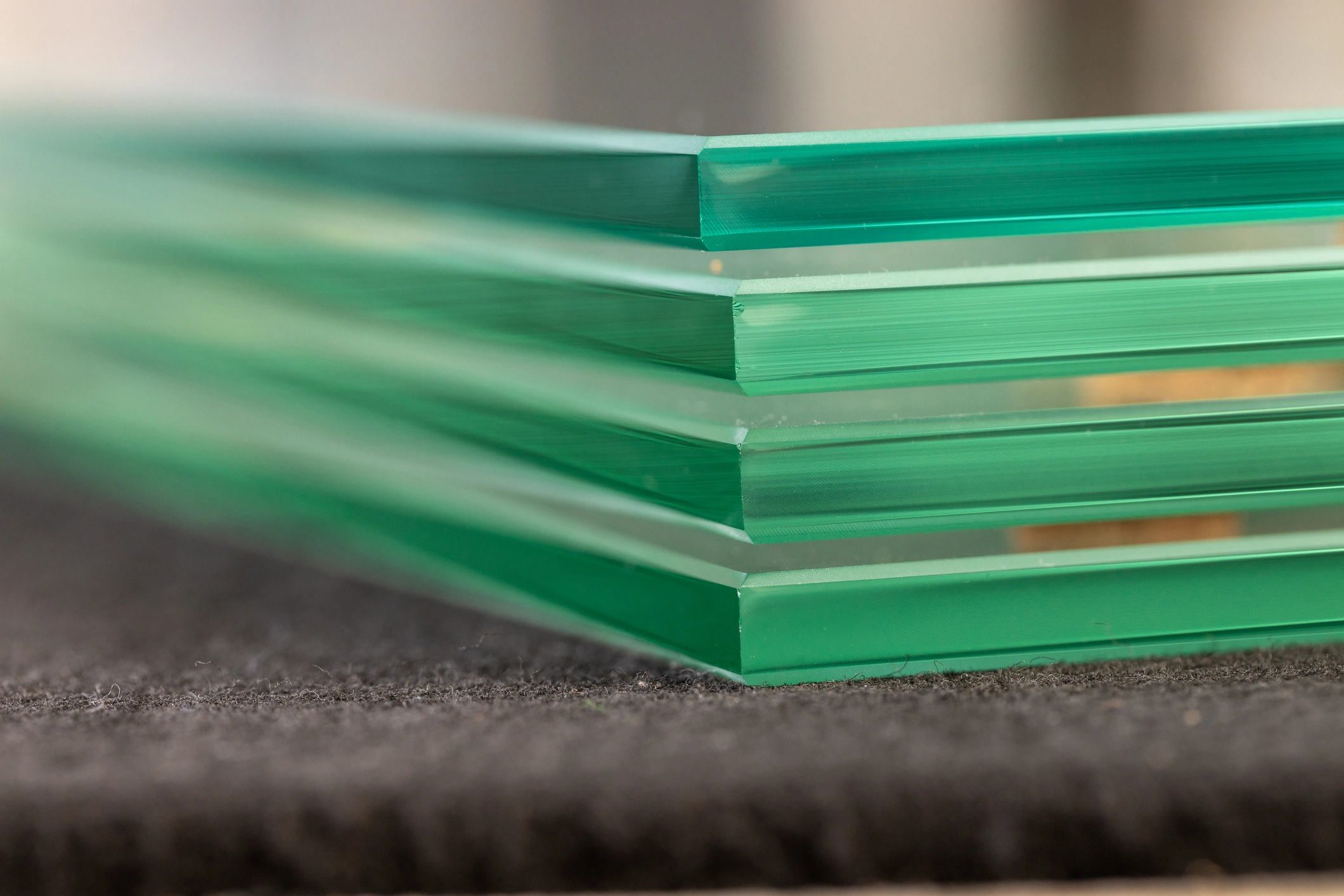
Laminated glass sandwiches a polymer interlayer — usually polyvinyl butyral (PVB) — between two lites. That interlayer gives the unit its signature behavior: break a lite and the fragments adhere to the film instead of falling out. That is why codes point to laminated glass for overhead and sloped glazing, why security-rated assemblies use it, and why post-breakage integrity matters: a laminated unit stays in its frame after severe weather or an impact.
Acoustics are the second well-known benefit. The viscoelastic interlayer dampens vibration as sound passes through, which is why the same construction that raises the safety rating also helps with traffic noise.
What laminated glass does not substantially change is the U-value. Two lites bonded by a thin interlayer are, thermally, close to two lites with no gap at all — roughly the same heat transfer as a single-pane unit of equivalent total thickness. The interlayer can marginally slow direct transmission, but it does not stop radiant or conductive loss. If a spec calls for laminated glass because the building needs safety or security performance, that requirement stands alongside the thermal one rather than replacing it.
What changes when the gap goes
Vacuum insulated glass takes the opposite approach to the space between lites. Instead of an air or argon cavity with a low-conductance gas fill, the gap is evacuated to about 0.3 mm — roughly the thickness of three sheets of paper — and held open by a precision micro-pillar support grid. With almost no gas present, there is almost nothing to conduct heat across the gap, which is what lets a unit this thin reach a center-of-glass U-value of 0.46 W/m²·K (0.081 Btu/h·ft²·°F) standalone, or approximately 0.25 W/m²·K (0.044 Btu/h·ft²·°F) in the hybrid build that bonds a VIG panel to a conventional IGU cavity. Those figures are calculation-derived under EN 673 / ISO 10292 conditions — NFRC 100/500 and EN 673 certification testing is in progress, and the methodology page shows how they are derived.
The acoustic story is not a copy of the laminated result. A vacuum gap interrupts sound transmission in a different way than a damping film does, and the thin unit leaves less cavity volume for resonance to build in. The honest framing is that both approaches improve acoustic performance from clear glass, by different mechanisms, and the configuration determines how far each goes.
Where laminated and VIG are actually a pair
The two technologies are not competitors — they solve different problems, and in several configurations they are combined. In a storefront, transom, or overhead assembly, the laminated lite provides the safety and post-breakage behavior the code requires, while the VIG panel carries the thermal performance the energy model needs. In a curtain wall, the laminated lite handles impact and post-breakage requirements; the VIG panel delivers the insulation. In a cab or marine application, a laminated outer lite adds impact resistance to the assembly while the VIG panel handles heat and noise.
There are also places where a standalone VIG unit replaces laminated glass outright — most notably in historic sash retrofits, where a 6.3 mm standalone (3+0.3+3 mm) fits a rebate cut for single-pane glass and is roughly 50% lighter than the thinnest common 24 mm triple-pane unit.
Which one belongs in your spec
Ask what the glazing has to do that the assembly around it cannot:
Post-breakage integrity, forced-entry resistance, or overhead retention — that is laminated territory, and the code often says so directly. Where tempered glass meets the applicable safety-glazing standard (ANSI Z97.1, EN 12150, or the relevant national code), it may satisfy the requirement without a laminated lite — confirm with your code consultant.
A materially lower U-value in a thin unit — that is vacuum glass, particularly where the existing frame cannot accept a deep triple-pane stack.
Both at once — that is the hybrid VIG build, where the two technologies share a single unit.
Model both options side by side in the ROI Engine — it prices conduction savings per configuration so the thermal case for each assembly is explicit.
See how hybrid VIG assemblies are built for the construction details behind each configuration.
Questions about a specific opening or assembly? Contact the team — drawings and the performance targets the assembly has to hit are enough to start a proper assessment.