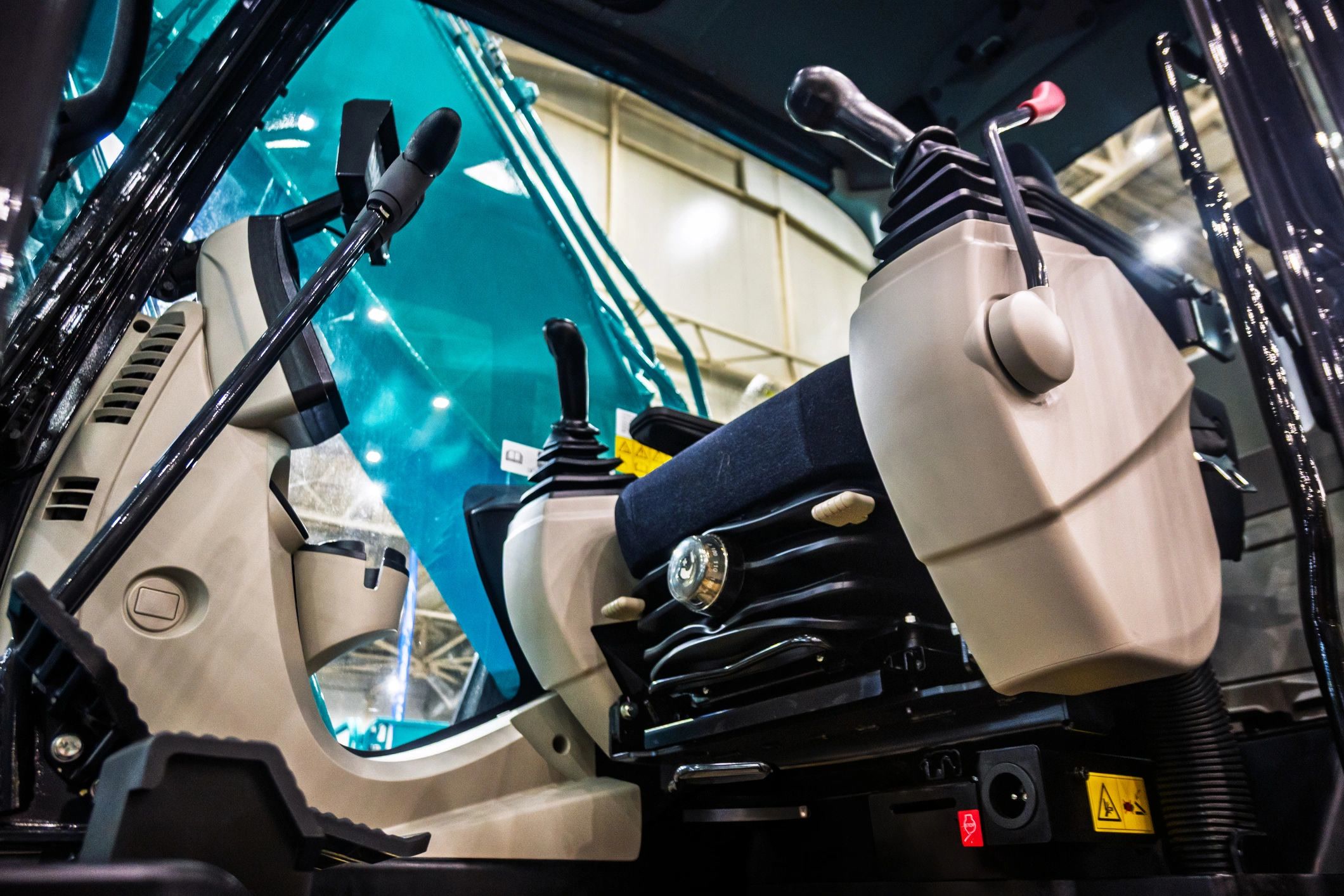
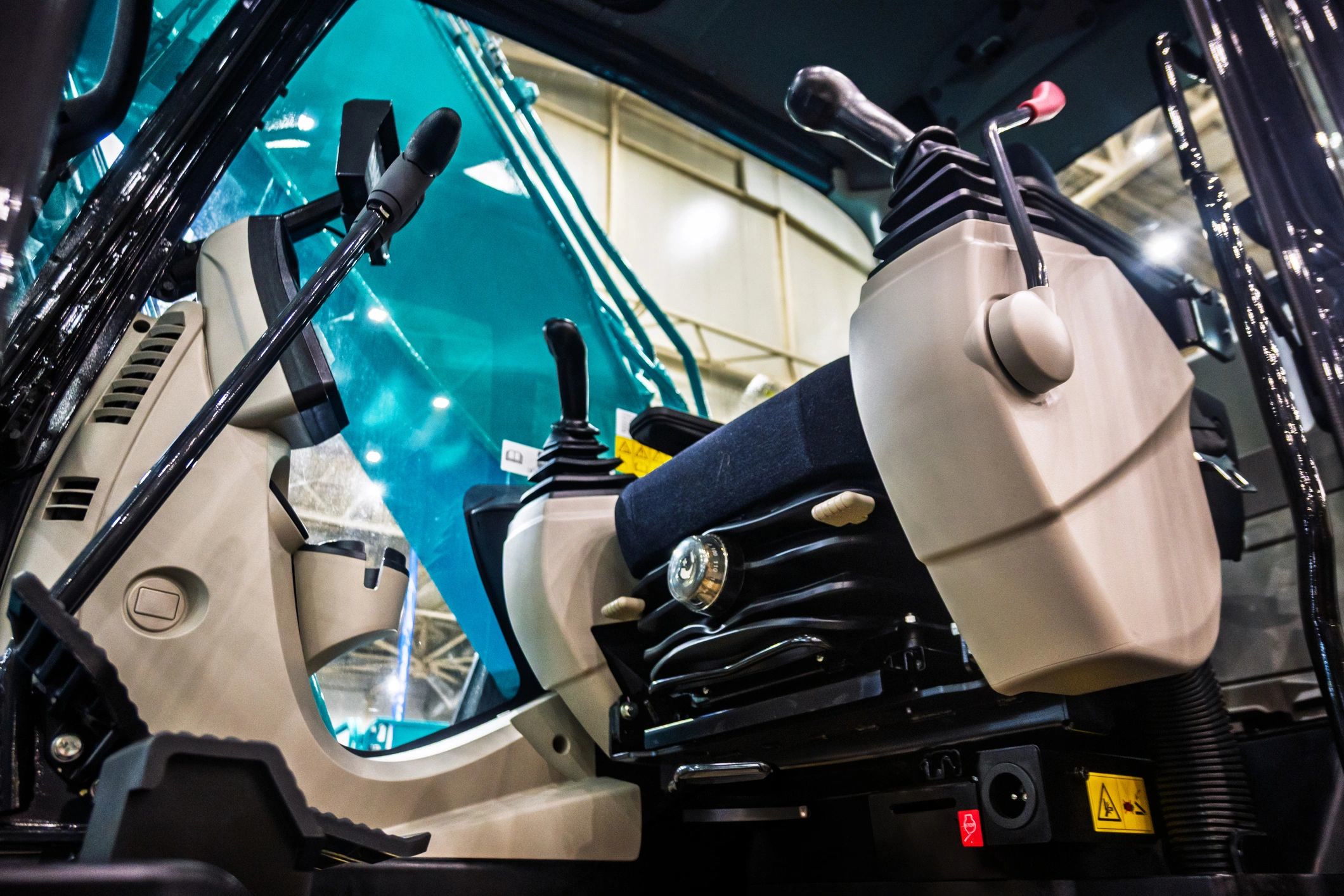
Heat is the most common reason operators cut shifts short. A glass cab in direct sun can reach 50–60 °C (120–140 °F) inside before the air conditioning catches up, and once the cab is heat-soaked, the HVAC runs at full capacity just to hold a tolerable temperature. The glazing is the first line of defense — and on most machines it is still single-pane tempered glass, which offers almost no resistance to heat flow.
This post covers the operator side of the cab glazing argument: heat stress, visibility, noise fatigue, and what better glass actually changes for the person sitting in the cab all day.
Heat stress is a productivity and safety issue
OSHA and NIOSH both recognize heat stress as a serious occupational hazard. Core body temperature above 38 °C (100.4 °F) impairs reaction time and decision-making; above 39.5 °C (103 °F) the risk of heat stroke rises sharply. A cab that cannot maintain a safe working temperature is not just uncomfortable — it is a liability.
The cab climate system is the primary control, but glazing determines how hard it has to work. Single-pane glass at U ≈ 6.2 W/m²·K conducts heat almost freely. On a hot day with the sun on the glass, the inner surface of single-pane can be close to the outer surface temperature — the operator is sitting next to a radiant panel. Vacuum insulated glass (VIG) at U ≈ 0.46 W/m²·K (0.081 Btu/h·ft²·°F) breaks that conduction path. The inner surface stays near cab air temperature, so the radiant load on the operator drops with the conductive load.
These are calculation-derived figures under EN 673 / ISO 10292 conditions — NFRC 100/500 and EN 673 certification testing is in progress.
Solar gain and the coating choice
Conduction is the winter problem and the night-shift problem. Solar gain is the summer problem, and in a cab it is severe: glass on five or six sides, often at low angles that catch direct sun for most of the day, with hot ground radiating back up from below.
VIG reduces the conductive component of heat transfer. For solar control, the coating matters. A low-E coating with a lower solar heat gain coefficient (SHGC) reduces the fraction of solar energy that passes through the glass as heat. Pairing VIG with a solar-control low-E coating addresses both paths: conduction through the glass and solar gain through it. The construction-vehicle configurator lets you select a coating and see the combined effect on the cab's thermal load.
Glare and visibility
Operator visibility is a safety requirement, not a comfort preference. Glare from a low sun angle, reflections off wet ground, or haze from a fogged window all reduce the operator's ability to see the work zone clearly.
VIG does not change the optical clarity of the glass — it uses the same tempered substrates as conventional cab glazing. What it changes is fogging. Cab windows fog when the inner surface drops below the dew point of the air inside. VIG keeps the inner surface near cab air temperature, so passive fogging resistance improves without running the defroster. Fewer fogged windows means fewer visibility interruptions during the shift.
The frit-seal perimeter of a VIG unit runs cooler than the center of glass — it is worth checking that strip against the cab's dew-point conditions, particularly in very cold climates. The configurator outputs a condensation resistance index for the selected build and opening size.
Noise fatigue over a long shift
ISO 6394 sets operator noise exposure limits for earth-moving machinery. Cab noise comes from the engine, hydraulics, tracks, and the work itself — and the glazing is one of the few elements the cab designer can change without touching the drivetrain.
THERMGLASS standalone VIG achieves a design-stage STC estimate of 35–39 dB; hybrid builds reach STC 41–45. Standard single-pane cab glass sits at STC 27–31. The difference is not dramatic in absolute terms, but it is meaningful over an eight- or ten-hour shift. Reduced noise exposure means less auditory fatigue, easier communication with ground crew, and a lower cumulative noise dose. Cab noise certification testing is in progress — treat these as design-stage estimates, not certified ratings.
Electric machines: the comfort case is stronger
In a diesel machine, the engine runs warm and waste heat is available for cab heating. The operator comfort argument for better glazing is primarily about summer cooling and noise.
In an electric machine, there is no waste heat. The heat pump draws from the battery for both heating and cooling, and in cold weather cab heating is one of the largest non-propulsion loads on the machine. An operator who is cold because the cab cannot hold temperature is also an operator whose machine has less runtime. The glazing U-value matters more in an electric cab, not less — and the operator comfort argument and the range argument point in the same direction.
What changes for the operator
Better cab glazing does not replace a well-designed climate system. What it does is reduce the load that system has to fight:
- Lower radiant heat load — the inner glass surface stays near cab temperature, so the operator is not sitting next to a hot panel
- Passive fogging resistance — fewer visibility interruptions, less defrost runtime
- Reduced solar gain (with a solar-control coating) — less heat entering through the glass in direct sun
- Lower noise transmission — less auditory fatigue over a long shift
The result is a cab that is easier to keep comfortable, with a climate system that runs less hard to do it.
Specifying for your machine
The construction-vehicle configurator at THERMGLASS accepts cab opening dimensions, climate zone, and coating selection, and outputs U-factor, condensation resistance, and estimated HVAC load reduction for the selected build. The heavy-equipment ROI engine translates that into a fuel or battery-energy savings estimate for diesel and electric machines respectively.
Configure a cab panel for your machine — U-factor, condensation resistance, and weight for your actual openings.
Model the energy savings in the heavy-equipment ROI engine — diesel and electric duty cycles, with idle hours counted.
Questions about a specific machine, fleet, or OEM program? Contact the team.